Initiative and Execution Management
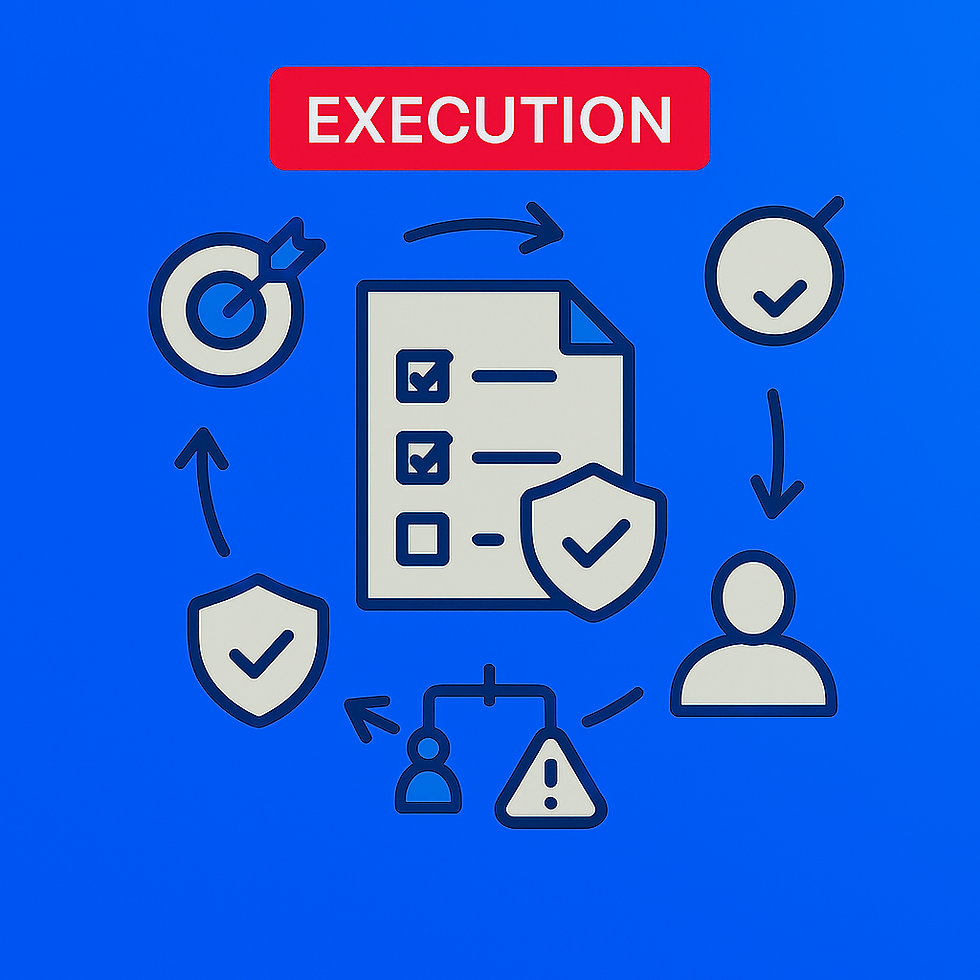
Turning Strategy Into Action Without Micromanagement
Strategy rarely fails at the planning stage.
It fails during execution.
Objectives are defined, priorities are agreed, and teams are motivated. Then initiatives drift. Dependencies are missed. Progress is unclear. Leadership sees activity, but not movement.
At Cognigate, we focus on initiative and execution management as the missing link between strategy and results. Using Profit.co, we help organizations translate objectives into initiatives that are visible, owned, and trackable without turning execution into control or micromanagement.
This article explains how we design initiative and execution management so strategy actually moves forward.
Cognigate Point of View on Initiative and Execution Management
Execution breaks down when visibility replaces trust, or when trust replaces visibility.
Too much control leads to micromanagement.
Too little structure leads to drift.
Our point of view is clear:
initiative and execution management should create shared visibility while preserving team autonomy.
Profit.co supports this balance when initiatives are designed as part of the operating rhythm, not as a reporting burden.
Translating Objectives Into Initiatives and Tasks
Making Strategy Actionable
Objectives set direction, but they do not execute themselves.
Without clear initiatives, teams struggle to understand what actually needs to happen next.
How We Design the Translation Layer
As part of initiative and execution management, we help organizations:
Break objectives into meaningful initiatives
Define outcomes for each initiative
Connect initiatives directly to OKRs
Avoid turning initiatives into vague task lists
This creates a clear bridge between strategic intent and daily work.
Assigning Ownership and Managing Dependencies
Making Responsibility and Coordination Visible
Execution slows down when ownership is unclear or dependencies are hidden.
Teams wait on each other without realizing it. Issues surface too late.
Designing Ownership and Dependencies
We design initiative and execution management so that:
Each initiative has a clear owner
Dependencies between teams are visible
Cross-functional handoffs are explicit
Responsibility is shared, not diluted
This clarity improves coordination without creating unnecessary oversight.
Tracking Progress Without Micromanagement
Focusing on Movement, Not Surveillance
Progress tracking often fails because it feels like control.
Teams spend time updating tools instead of advancing work.
How We Track Progress
Using Profit.co, we design progress tracking that:
Focuses on outcomes and milestones
Encourages regular but lightweight updates
Highlights blockers instead of status
Supports conversation, not inspection
Progress becomes a shared signal, not a performance scorecard.
Identifying Execution Risks Early
Seeing Problems Before They Escalate
Most execution risks are visible early, but ignored.
Delays, dependency issues, or shifting priorities show up quietly before they become urgent.
Designing Early Risk Visibility
As part of initiative and execution management, we help organizations:
Surface stalled initiatives early
Highlight overloaded teams
Identify conflicting priorities
Create space for course correction
This allows leadership to intervene constructively, not reactively.
Visibility That Preserves Autonomy
The Right Balance
The goal of initiative and execution management is not control.
It is confidence.
When designed well:
Teams understand expectations
Leaders see progress clearly
Decisions are based on evidence
Autonomy is preserved
Profit.co becomes a shared execution layer, not a task manager.
Execution as a Core Capability
When initiative and execution management are handled intentionally:
Strategy moves beyond planning
Teams stay focused without pressure
Risks are addressed early
Outcomes improve consistently
At Cognigate, we use initiative and execution management to help organizations turn strategy into sustained action, creating visibility into execution while respecting how teams work best.



Comments